Arizona’s Infamous Pest: The Scorpion
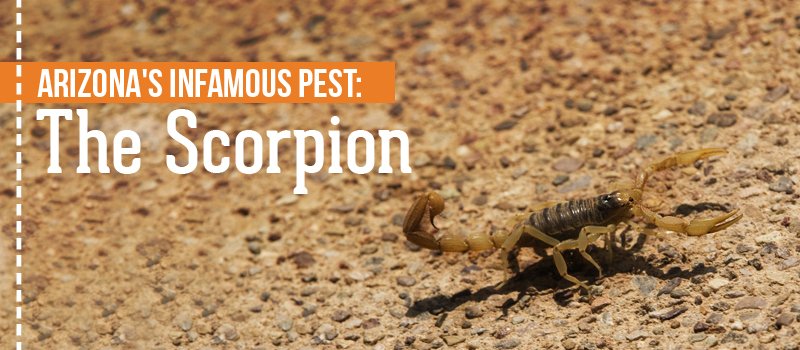
You’ve probably seen it before, scuttling across the ground with its arched, sharp tail hanging in the air. Quite possibly you have seen one or two of these pests in your own home and maybe in businesses as well. Scorpions are quite prevalent in Arizona; the University of Arizona has stated that at least 56 species of scorpions have been identified in the state alone.
Scorpions are arachnids, like spiders or ticks, and have eight legs. The pair of lobster-like grasping claws and the narrow tail—complete with the telltale stinger—easily identify them. While all scorpions carry venom in their stingers, there is only one species of scorpion whose venom is strong enough to cause serious harm to human health: the Arizona bark scorpion.
Identifying the Bark Scorpion
The bark scorpion is usually small, measuring only between 2 to 3 inches long. They are usually light tan in color, which allows them to blend into the native desert environment. These scorpions are mainly active during the night. Unlike other scorpions, they are good climbers and can be found on walls, ceilings, and even curtains. Also unlike other scorpion species, bark scorpions congregate with other bark scorpions in the winter.
Scorpion Stings
For most scorpion stings, there is little danger; simple use of painkillers is sufficient to relieve minor localized swelling and pain. However, according to Banner Health, stings from the bark scorpion have been known to cause serious effects, including burning pain in the area stung, numbness and tingling in other areas of the body, difficulty swallowing and excessive drooling, slurred speech, muscle twitching and respiratory problems. Serious health complications from bark scorpions stings are rare and are most likely to occur with individuals that experience a serious allergic reaction to the sting. Even when you don’t have an allergic reaction to the sting, it still hurts!
What to Do in Event of a Sting
In the event that a scorpion stings you and you show any serious symptoms or allergic reactions, seek immediate attention with your health care professional. Individuals with impaired immune systems should also seek immediate medical attention.
Preventing Scorpion Stings
Preventing scorpion infestation is the best way to prevent getting stung. We are often asked by new customers if there are steps they can take to help get rid of scorpions. Here are some simple steps that will help keep scorpions out of our home as well as reduce the nesting sites around your home where they like to live and breed.
- Make sure weather stripping around doors, windows, and pet doors seal properly and are not worn. If you can see daylinght or small openings around these areas you should get the weather stripping replaced.
- Remove loose objects and any clutter close to the home and in the yard.
- Boxes, tarps, pool toys, bricks, containers and other debris are places that scorpions hide under. If there are items that you need to keep, move them away from the home and keep these items off the ground.
- Keep potted plants off the ground and do not overwater.
- Remove wood piles or move the wood as far away from the home as possible.
- Prune back trees and bushed from touching the home or hanging over the roofline.
- Keep palm trees properly trimmed.
- Excessive water or leaks can attract scorpions. Fix leaky sprinkler systems and eliminate areas where there is standing water.
- Shake and examine clothing before putting it on (especially shoes). Wear shoes at all times when outdoors, and check beds and bed linens before lying in them. My mom was stung 5 times by the same scorpion in bed. They are not trying to find you to sting you, they are just out foraging for food, water and looking for shelter and when they come in contact with humans they defend themselves.
Conclusion
While most species of scorpion pose little dangers to humans, there are some risks posed by a few, especially the bark scorpion. However, by taking proper measures, you can reduce the likelihood of coming face to face with Arizona’s most infamous pest.
If you live in the Phoenix area then we can provide you with scorpion control. We have offices in Phoenix and Gilbert that allow us to easily serve the entire metro area including Glendale, Tempe, Scottsdale, and Mesa. Click here to get your free quote!